The model plan
Day trip Possible but tight: about 2½ hours each way from Kyoto or Osaka, roughly 4 direct trains a day, and the last evening return to Osaka leaves around 18:30 — before the town's after-dark bath-hopping really gets going. An overnight stay is the classic way to do Kinosaki.
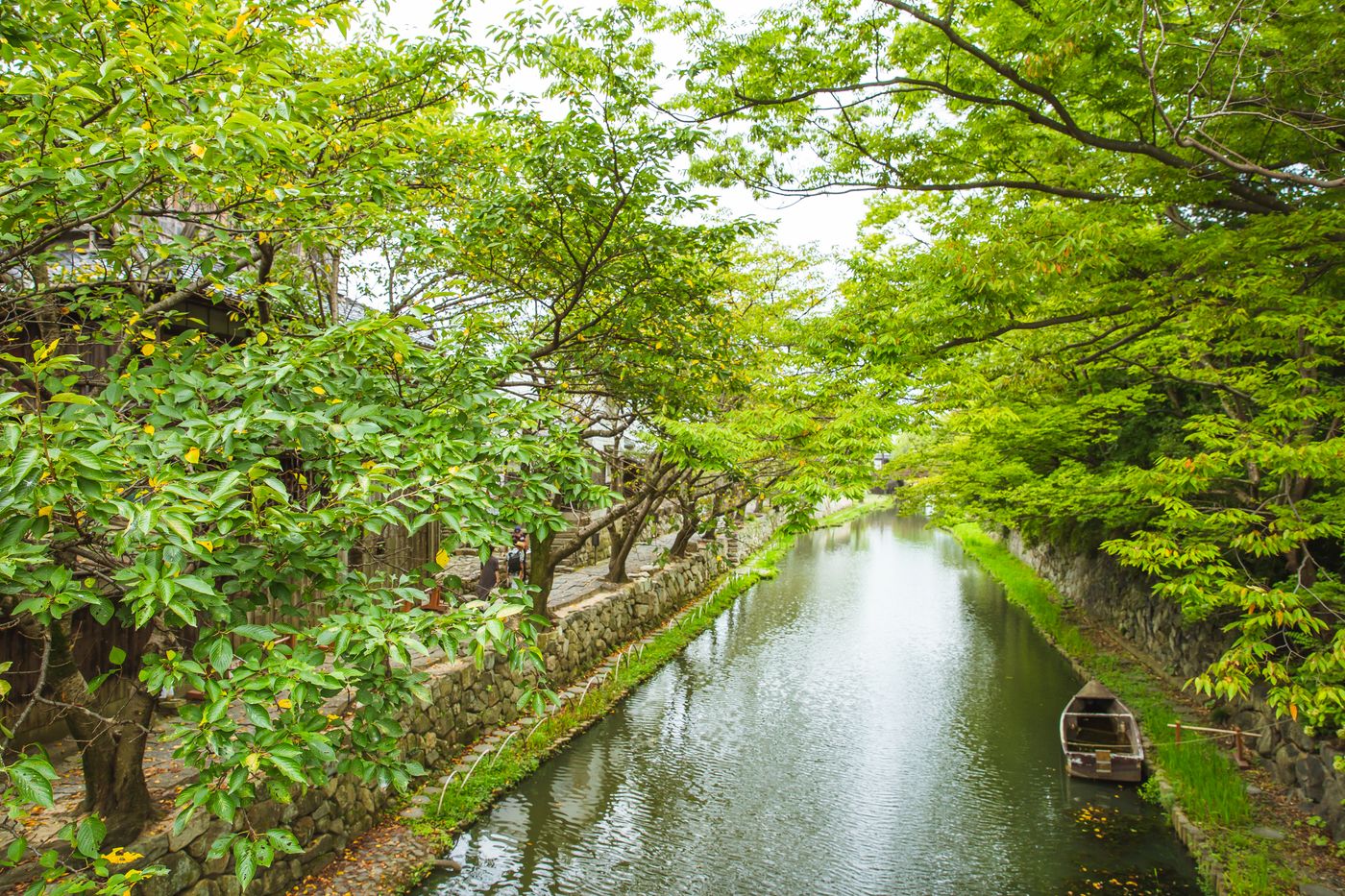
Overnight Arrive in the afternoon, check in and collect your free sotoyu pass, yukata and geta. Change into yukata and stroll the willow-lined canal, hopping between public baths with your pass. Back to the inn for a kaiseki dinner (crab is the winter speciality), then one more bath before 23:00. Next morning, fit in a final soak — your pass stays valid until 13:00 on checkout day.
| Item | Indicative cost |
|---|---|
| Yumepa one-day pass, day visitors (adult / child) | ¥1,500 / ¥750 |
| Single public bath entry (adult / child) | ¥800 / ¥400 |
| Sotoyu pass for ryokan guests | Free (check-in to 13:00 on checkout day) |
| Ryokan, 1 night for two, dinner + breakfast (realistic mid-range) | ≈ ¥50,000–100,000 |
| Limited Express Kyoto → Kinosaki Onsen (per person, one way) | ¥5,370 |
| Limited Express Osaka → Kinosaki Onsen (per person, one way) | ¥6,140 |
The tattoo policy, in the town's own words
Most Japanese onsen towns leave tattoo rules to each facility. Kinosaki publishes its policy in English, town-wide. The FAQ on Visit Kinosaki, the official tourism website of Toyooka City, answers the question "Are people with tattoos allowed in Kinosaki Onsen's hot springs?" like this:
"People with decorative tattoos are allowed into the 7 public hot springs in Kinosaki Onsen (Satono-Yu, Jizo-Yu, Yanagi-Yu, Ichino-Yu, Goshono-Yu, Mandara-Yu, and Kono-Yu). However, some accommodations have different rules regarding their own in-house baths."
So the split to remember is: the seven public baths are a clear yes; your inn's own bath is a separate question — ask the ryokan directly, especially about private in-room baths. All seven public baths have separate men's and women's sides; none is mixed-gender.
The seven sotoyu — and why only six are open
The seven public bathhouses (sotoyu) line the canal through town. Five open 07:00–23:00; the two small ones, Yanagi-yu and Mandara-yu, open only 15:00–23:00. Each bath closes on a different weekday, so something is always open — but plan your favourites around their days off:
- Satono-yu — closed for rebuilding since April 2024, indefinitely. The station-front bath is out of action for now.
- Jizo-yu — 07:00–23:00, closed Mondays.
- Yanagi-yu — 15:00–23:00, closed Thursdays. The small, very hot local favourite.
- Ichino-yu — 07:00–23:00, closed Wednesdays. Known for its cave-like outdoor bath.
- Goshono-yu — 07:00–23:00, closed Thursdays. The grandest of the seven, with indoor and outdoor baths and a waterfall.
- Mandara-yu — 15:00–23:00, closed Wednesdays. The smallest and oldest-feeling.
- Kono-yu — 07:00–23:00, closed Tuesdays. The oldest bath in town, reopened 28 October 2026 after a renovation closure.
For day visitors the maths is simple: at ¥800 per bath, the ¥1,500 Yumepa pass pays for itself at the second bath. Staying guests should not buy one — your inn's free pass covers everything.
Where to stay
Kinosaki has 80+ ryokan, and rates are usually per person including dinner and breakfast. The official FAQ puts prices from about ¥20,000 per person and up, so roughly ¥40,000 a night for two is the floor; guide-compiled ranges put the realistic mid-range for two at about ¥50,000–100,000 a night with both meals, with crab-season weekends (November–March) at the top. Treat those ranges as indicative, not live quotes. Most inns open bookings only 4–6 months ahead, and Visit Kinosaki runs an official English booking site with the widest local inventory — further out, the site simply shows no availability yet. Wherever you stay, confirm the in-house bath rule separately if you plan to soak at the inn as well as in the public baths.
Access
- From Kyoto: JR Limited Express Kinosaki, direct to Kinosaki Onsen Station, about 2 h 20–35 min, ¥5,370 (reserved seat).
- From Osaka / Shin-Osaka: JR Limited Express Kounotori, direct, about 2 h 40–45 min, ¥6,140 (reserved seat).
- From Tokyo: Shinkansen to Kyoto or Shin-Osaka, then the limited express above — roughly 4 to 4¾ hours total, around ¥18,550 (approximate).
- All seats on these limited expresses are reserved — book a seat, don't just turn up. The nationwide JR Pass and JR West Kansai Wide Area Pass cover these trains.
- At the station, a free shuttle bus runs to local inns roughly 12:30–18:00, timed to limited-express arrivals.
What visitors say
Summarised from English-language reviews of Kinosaki Onsen on TripAdvisor (4.6/5, checked November 2026) — not our own experience:
The tattoos are a non-issue: an April 2026 reviewer wrote that "its baths are tattoo-friendly and we saw our share of people with tattoos", and another called it "a big advantage" that "you don't have to cover your tattoos anywhere in the baths". Shorter verdicts say the same, e.g. "All tattoo friendly." (March 2025). We found no reviews complaining of a tattoo refusal at the public baths.
Favourites and fair warnings: reviewers rank Goshono-yu top for its indoor and outdoor baths and waterfall, and like Ichino-yu's cave-like outdoor bath; Mandara-yu gets called small and dated ("Mandara-Yu needs updating"). The water runs hot — around 42 °C — and the town's popularity draws crowds: "once a hidden gem, but is now a tourist destination".
FAQ
Are tattoos allowed in Kinosaki's public baths?
Yes. Visit Kinosaki, Toyooka City's official tourism site, states that people with decorative tattoos are allowed into the 7 public hot springs. It is a town-wide policy for the public baths.
How much is the Yumepa pass?
¥1,500 for adults, ¥750 for children, for one calendar day of unlimited entry (single baths are ¥800/¥400). Ryokan guests bathe free with the pass from their inn, valid until 13:00 on checkout day.
Can I bathe at my ryokan with tattoos?
Maybe. The official welcome covers the public baths only; some accommodations have different rules for their in-house baths. Ask your inn directly.
How do I get to Kinosaki from Kyoto or Osaka?
Direct limited expresses: about 2 h 20–35 min from Kyoto (¥5,370) and 2 h 40–45 min from Osaka (¥6,140). All seats are reserved.
Sources checked 7 November 2026: Visit Kinosaki (Toyooka City official tourism) FAQ for the tattoo policy, Yumepa price, hours, closing days, guest pass and access summary; Kinosaki Onsen Tourism Association fee schedule for single-bath prices; JR West fare-search data for train times and fares; Japan Ryokan Guide ranges for ryokan prices (indicative); visitor feedback from TripAdvisor reviews of Kinosaki Onsen. Bath status: Satono-yu's rebuild closure per Toyooka City; Kono-yu's 28 October 2026 reopening per the operator/tourism association notice. Fees and hours change — confirm at booking and on arrival.